
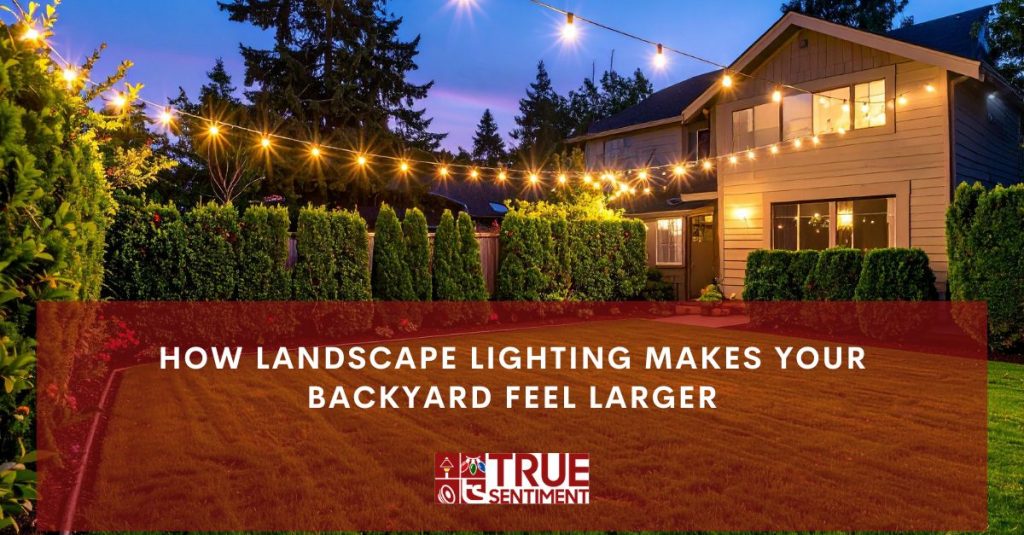
You don’t need to tear down fences or rip up your patio to make your backyard feel bigger. Sometimes, all it takes is the right light. Landscape lighting is one of the most underestimated tools in outdoor design. It shapes how people perceive a space—drawing the eye outward, creating depth where there was none, and turning a compact yard into something that feels expansive and intentional. Whether your backyard is modest or sprawling, the way it’s lit determines how it feels to spend time in it.
This post breaks down exactly how strategic lighting expands the perceived size of an outdoor space, which techniques work best, and what to consider when planning your own setup.
Why Lighting Changes How We Perceive Space
Before diving into techniques, it helps to understand why lighting has such a powerful effect on spatial perception.
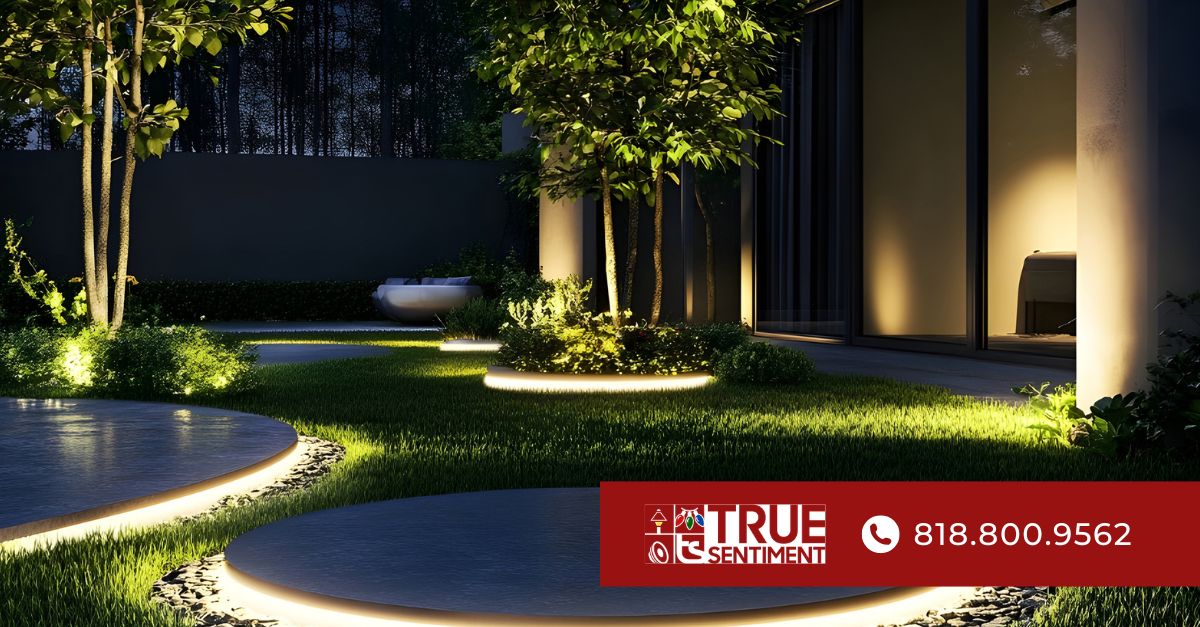
Our brains use visual contrast, focal points, and depth cues to estimate the size of a space. In a dark or poorly lit backyard, the eye has nowhere to travel—it stops at the nearest visible edge. But when lighting is placed thoughtfully, it guides the eye through the space, creating layers of depth that signal “there’s more here.” The result is a backyard that feels larger than it actually is.
This same principle is used in interior design, retail stores, and theater production. Landscape lighting applies it outdoors, where the stakes—and the canvas—are entirely different.
Uplighting: Directing Attention Upward and Outward
One of the most effective techniques for expanding perceived space is uplighting. By placing fixtures at ground level and aiming them upward toward trees, walls, or architectural features, you draw the viewer’s gaze skyward and push the visual boundaries of the yard outward.
A tall tree lit from below, for example, becomes a vertical anchor. It creates a sense of scale and makes the surrounding space feel larger by comparison. Uplighting garden walls or pergolas has a similar effect—instead of a wall feeling like a boundary, it becomes a backdrop that adds dimension.
For backyards with mature trees, uplighting is often the single highest-impact change you can make.
Path Lighting: Creating Depth and Direction
Depth is what separates a flat-feeling yard from one that feels layered and expansive. Path lighting—low-profile fixtures placed along walkways, garden beds, or lawn edges—creates a sense of journey. The eye follows the light, and wherever the path leads, the space feels intentional and extended.
This technique works especially well when the path curves or disappears around a corner. The imagination fills in the rest, and the yard suddenly feels like it continues beyond what’s visible. Even a modest garden bed can feel like a considered landscape when a line of path lights guides you through it.
Silhouette Lighting: Using Contrast to Create Drama and Distance
Silhouette lighting places a light source behind a plant, sculpture, or architectural element so that the object appears as a dark shape against an illuminated background. This technique creates strong contrast, which the brain reads as depth.
When a silhouetted shrub or ornamental grass sits against a glowing fence or wall, the layering effect makes the yard feel structured and three-dimensional. The more distinct layers a space has—foreground, midground, background—the larger it appears.
This is a particularly useful approach for narrow yards or spaces with awkward dimensions. Silhouette lighting redirects attention from the limitations of the space and replaces it with visual interest.
Moonlighting: Simulating Natural Scale
Moonlighting involves placing fixtures high in the canopy of trees and aiming the light downward, mimicking the soft, dappled effect of natural moonlight filtering through branches. The result is both beautiful and spatially effective.
Because the light source is elevated and diffused, it casts gentle shadows across the ground below. Shadows, like depth cues, signal that there’s more going on in the space than a single flat surface. The yard gains texture, dimension, and a sense of quiet scale.
Moonlighting tends to work best in yards with established trees. It’s a subtler technique than uplighting, but the cumulative effect—especially in a well-designed lighting plan—is significant.
How Zoning with Light Defines and Expands Space
A common mistake in outdoor lighting is treating the backyard as a single zone. Flooding the entire space with uniform light does the opposite of what most homeowners want—it flattens the yard and makes it feel smaller, not larger.
The better approach is to light different areas at different intensities, creating distinct “rooms” within the backyard. A brighter zone near the dining area, softer ambient light near the garden beds, and accent lighting along the fence line all work together to imply that the space is divided into purposeful areas.
When a backyard feels like it contains multiple zones, it automatically feels larger. The brain registers variety and interprets it as size.
The Role of Shadows in Spatial Perception
Shadows are just as important as light. A landscape lighting plan that eliminates all shadows produces a flat, washed-out result. Strategic shadows—created by angling fixtures, using shielded bulbs, or placing lights behind foliage—add texture and imply that the space has layers that extend beyond what’s immediately visible.
This is where professional lighting design earns its value. Understanding how shadows behave across different surfaces, seasons, and times of night requires experience. The True Sentiment team, for instance, works with residential and commercial properties across Los Angeles and Southern California to design custom outdoor lighting arrangements that account for exactly these kinds of nuances—because a lighting plan that looks right on paper doesn’t always behave the same way at 9 PM in December versus 9 PM in July.
Color Temperature: Warm vs. Cool Light and How Each Affects Space
The color of your light matters more than most people realize. Measured in Kelvins (K), light color ranges from warm amber tones (around 2700K) to cool, blue-white tones (5000K and above).
For most residential backyards, warm white light in the 2700K–3000K range creates an inviting, expansive feel. It softens edges, adds warmth to natural materials like wood and stone, and produces the kind of ambient glow that makes a space feel like somewhere you want to spend time.
Cooler light tends to create a sharper, more structured look. In some cases—particularly around water features or modern architecture—it can add a sense of precision and scale. But used across an entire backyard, cool light often makes spaces feel clinical and contracted.
What Fixture Placement Has to Do with Scale
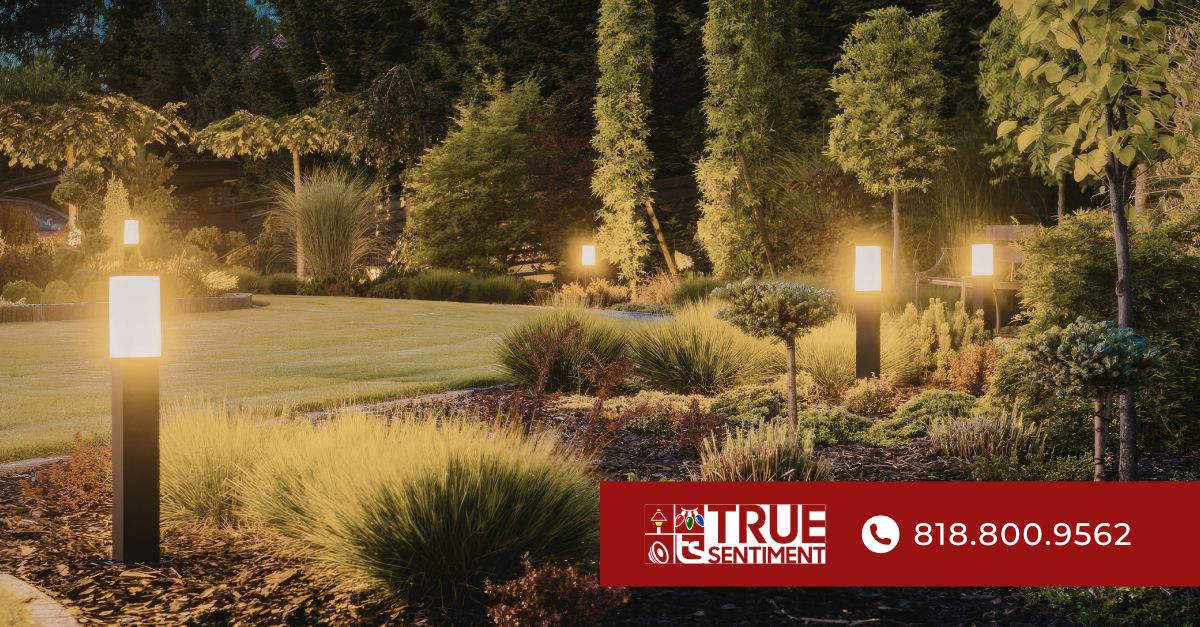
Beyond the type of light, placement is critical. Fixtures positioned too close together create a cluttered look that shrinks the visual field. Spacing them out—following the natural rhythm of the landscape—allows the eye to travel between points of interest rather than stopping at the first one it encounters.
A well-placed fixture at the far end of the yard is one of the most effective tools available. It gives the eye a destination, and the space between where you’re standing and where the light sits reads as distance.
Practical Considerations Before You Start
A great lighting plan is more than an aesthetic exercise. There are practical elements worth thinking through before committing to fixtures or installation.
Power and wiring: Low-voltage LED systems are the standard for most residential landscape lighting. They’re energy-efficient, long-lasting, and far safer than line-voltage alternatives. A professional installation ensures the wiring is properly buried, weather-sealed, and up to local code.
Fixture quality: Outdoor lighting lives in a harsh environment—UV exposure, rain, temperature swings, and insects all take a toll. Fixtures made from brass, copper, or marine-grade aluminum hold up significantly better than cheaper alternatives over time.
Glare control: Poorly positioned or unshielded fixtures create glare, which is uncomfortable and counterproductive. Shielded fixtures direct light exactly where it’s needed and prevent the “blinding” effect that makes outdoor spaces feel harsh.
Smart controls: Modern landscape lighting systems can be controlled via smartphone apps, timers, and motion sensors. Dimming capability is particularly valuable—it lets you adjust the ambiance for different occasions without reconfiguring any fixtures.
Make the Most of What You Already Have
A larger backyard isn’t always the goal—or the option. But a backyard that feels thoughtfully designed, immersive, and expansive? That’s achievable on almost any property.
Landscape lighting is one of the few outdoor investments that transforms how a space feels at the time of day when you’re most likely to use it. The right plan doesn’t just illuminate your yard; it reframes it entirely.
If you’re ready to see what’s possible in your own outdoor space, True Sentiment’s team of outdoor lighting specialists serves residential and commercial properties throughout Los Angeles and Southern California. Custom-designed to your landscape, your lifestyle, and your goals—reach out to start the conversation.
Frequently Asked Questions
Does landscape lighting really make a small backyard look bigger?
Yes—when done well. Strategic lighting creates depth, draws the eye toward focal points, and establishes distinct zones, all of which signal to the brain that a space is larger than it is. Uniform or poorly placed lighting can have the opposite effect.
What type of landscape lighting is best for expanding a yard’s perceived size?
Uplighting, path lighting, moonlighting, and silhouette lighting are the most effective techniques. Each creates a different kind of depth or directional cue that expands the visual field.
How many fixtures do I need for a small backyard?
There’s no universal number—it depends on the size, shape, and features of the space. A professional lighting designer can assess your yard and recommend a plan that balances coverage with visual clarity. Overcrowding fixtures is a common mistake that makes spaces feel cluttered.
Is warm or cool light better for outdoor spaces?
Warm white light (2700K–3000K) is generally preferred for residential backyards. It creates an inviting, expansive feel and complements natural materials well. Cool light works in specific applications but can make spaces feel smaller and less welcoming overall.
How long does landscape lighting installation take?
A standard residential installation typically takes one to two days, depending on the complexity of the design and the size of the property. Larger or more elaborate setups may take longer.